Wednesday, 12 February 2020

Author Biography


AUTHORS


Mark Twain, pseudonym of Samuel Langhorne Clemens, (born November 30, 1835, Florida, Missouri, U.S.—died April 21, 1910, Redding, Connecticut), American humorist, journalist, lecturer, and novelist who acquired international fame for his travel narratives, especially The Innocents Abroad (1869), Roughing It (1872), and Life on the Mississippi (1883), and for his adventure stories of boyhood, especially The Adventures of Tom Sawyer (1876) and Adventures of Huckleberry Finn (1885). A gifted raconteur, distinctive humorist, and irascible moralist, he transcended the apparent limitations of his origins to become a popular public figure and one of America’s best and most beloved writers.

https://www.britannica.com/biography/Mark-Twain/Literary-maturity


London in 1903

John Griffith London (born John Griffith Chaney; January 12, 1876 – November 22, 1916) was an American novelist, journalist, and social activist. A pioneer in the world of commercial magazine fiction, he was one of the first writers to become a worldwide celebrity and earn a large fortune from writing. He was also an innovator in the genre that would later become known as science fiction.[6]
His most famous works include The Call of the Wild and White Fang, both set in the Klondike Gold Rush, as well as the short stories "To Build a Fire", "An Odyssey of the North", and "Love of Life". He also wrote about the South Pacific in stories such as "The Pearls of Parlay", and "The Heathen".
London was part of the radical literary group "The Crowd" in San Francisco and a passionate advocate of unionization, workers' rights, socialism, and eugenics. He wrote several works dealing with these topics, such as his dystopian novel The Iron Heel, his non-fiction exposé The People of the AbyssThe War of the Classes, and Before Adam.
https://en.wikipedia.org/wiki/Jack_London
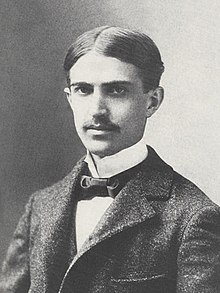

Resultado de imagen para Stephen Crane biography

Stephen Crane (1871-1900) was born in 1871 in Newark, New Jersey. He was educated at Lafayette College and Syracuse University. In 1891, he got a job as a freelance reporter, writing articles about the slums of New York. Without steady work as a reporter, Crane, himself, was a poor man and lived in the Bowery, New York's worst slum.
http://users.aber.ac.uk/jpm/ellsa/ellsa_cranebio.html


Bierce around 1866


Ambrose Gwinnett Bierce (June 24, 1842 – circa 1914) was an American short story writer, journalist, poet, and Civil War veteran. His book The Devil's Dictionary was named as one of "The 100 Greatest Masterpieces of American Literature" by the American Revolution Bicentennial Administration. His story "An Occurrence at Owl Creek Bridge" has been described as "one of the most famous and frequently anthologized stories in American literature"; and his book Tales of Soldiers and Civilians (also published as In the Midst of Life) was named by the Grolier Club as one of the 100 most influential American books printed before 1900.
https://en.wikipedia.org/wiki/Ambrose_Bierce
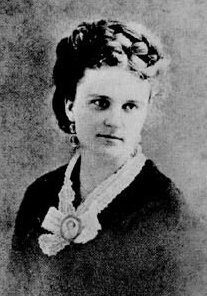


Chopin in 1894


Kate Chopin 7born  February 8, 1850 – August 22, 1904) was an American author of short stories and novels based in Louisiana. She is now considered by some scholars to have been a forerunner of American 20th-century feminist authors of Southern or Catholic background, such as Zelda Fitzgerald, and is one of the most frequently read and recognized writers of Louisiana Creole heritage.


https://en.wikipedia.org/wiki/Kate_Chopin


The Realism Period


Realism Period


Realism was an artistic movement that began in France in the 1850s, following the 1848 Revolution. Realists rejected Romanticism, which had dominated French literature and art since the late 18th century, revolting against the exotic subject matter and exaggerated emotionalism of the movement. Instead, Realists sought to portray “real” contemporary people and situations with truth and accuracy, including all the unpleasant or sordid aspects of life. Realist works depicted people of all classes in ordinary life situations, which often reflected the changes brought on by the Industrial and Commercial Revolutions.
The Realists depicted everyday subjects and situations in contemporary settings and attempted to depict individuals of all social classes in a similar manner. Classical idealism, Romantic emotionalism, and drama were avoided equally, and often sordid or untidy elements of subjects were showcased somewhat, as opposed to being beautified or omitted. Social realism emphasized the depiction of the working class and treated working-class people with the same seriousness as other classes in art. Realism also aimed to avoid artificiality in the treatment of human relations and emotions; treatments of subjects in a heroic or sentimental manner were rejected. Important figures in the Realist art movement were Gustave Courbet, Honore Daumier, and Jean-Francois Millet.
Religious figures and mourners in black gather outside for a burial.

Characteristics Of Realism 

1. Feelings of disillusionment
2. Common subjects; slums of rapidly growing cities, factories replacing farmlands, poor factory workers, corrupt politicians
3. Represented the manner and environment of everyday life and ordinary people as realistically as possible (regionalism)
4. Sought to explain behavior (psychologically/socially).
Resultado de imagen para Realism Period

Realism - Overview from Phil Hansen


Presentation Sheet


Resultado de imagen para UNIVERSIDAD DE PANAM


University of Panama 
CRU COCLE
Faculty of Humanity
English School 

Subject:
American Literature


Profesor:
Josevel Beitia


Student:
Ariel Sanchez
8-90-1454


February 12, 2020

WELCOME


THE REALISM 

Realism, also The Naturalism was during the Civil War in the United States (1830-1870).
this Civil War cost more than 2.3 million soldiers, however many people died.
Walt Whitman  claimed that "a great literature will... arise out of the era of those four years,"
Naturalism was an intensified form of realism, Realities became the writer's primary mode of expression.

Walt Whitman
Whitman, (born May 31, 1819, West Hills, Long Island, New York, U.S.—died March 26, 1892, Camden, New Jersey), American poet, journalist, and essayist whose verse collection Leaves of Grass, first published in 1855, is a landmark in the history of American literature.